What are they?
Emotions are a complex state of feeling that results in physiological and psychological changes, which in turn influence thought and behaviour. For example, a person sees a bear he/she would start to sweat and experience fear. This fear would influence him/her to run away.
Lisa Feldman Barrett gave the most recent (2017) definition of emotion in her work ‘The theory of constructed emotion’. She stated that emotions are constructed from core affect and conceptual knowledge. In simpler terms, core affect refers to your basic, raw feelings. For example, feeling a rush of energy or feeling your eyes swell with tears. Conceptual knowledge refers to a mental process that helps the mind to make sense of your core affect. For example, labelling the feeling of a rush of energy which could be based your past experiences or your culture. When they both work together it results in experiencing emotions. For example, feeling your eyes swell with tears might be labelled as sadness if you got scolded or it might be labelled as happiness if you are seeing your parents after a long time.
Core emotions or basic emotions
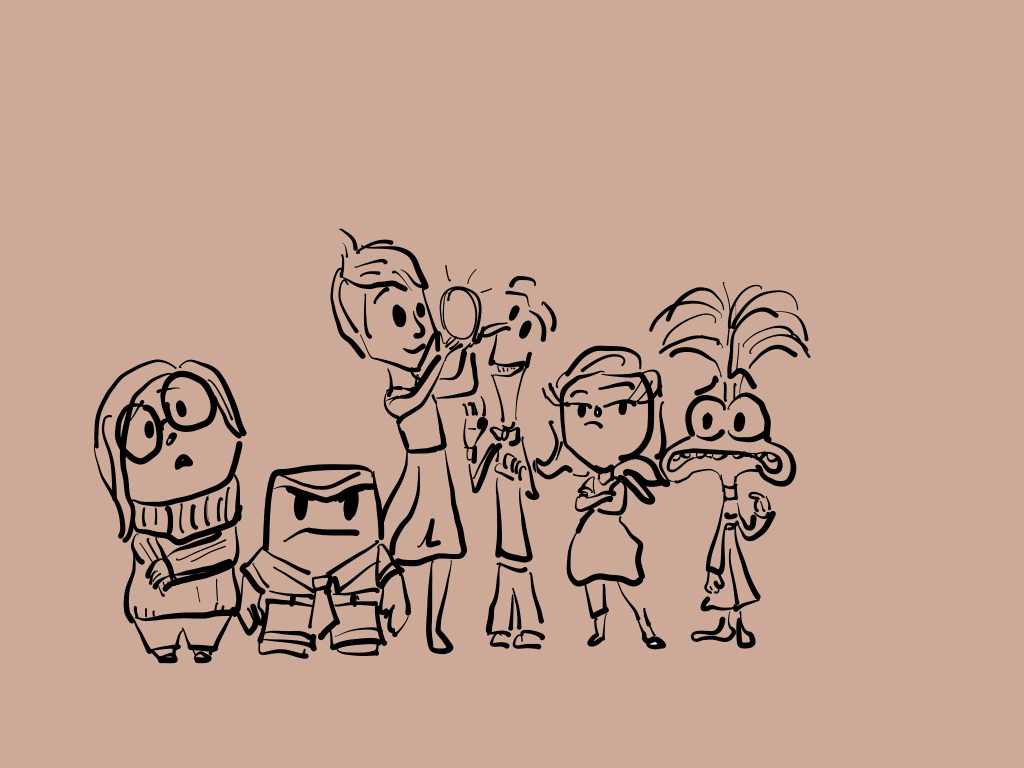
Paul Ekman gave us the 6 basic emotions which are universal. People from different cultures, regions, ethnicity, languages all feel these basic emotions. These emotions are joy, sadness, disgust, fear, surprise and anger.
Everyone has a different way of expressing these emotions. The timelines of these emotions also vary from individual to individual which includes its onset, duration and decline. However, emotions typically don’t last longer than an hour if they do, they are more likely to be classified as a mood or a disorder.
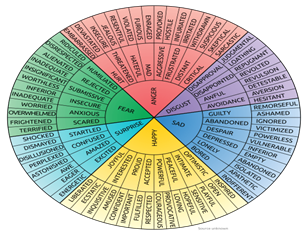
Robert Plutchik, in 1980 gave us a visual model called the ‘wheel of emotions’ in which he stated that different emotions are related to each other, and they combine to form more complex emotions. The emotions at the center are the least intense and at the edges are the most intense. Each primary emotion has an opposite emotion on the wheel which represents the polar emotional state. For example, joy and anger.
Try smiling, like give a genuine smile. Do you feel a little bit happier? Paul Ekman gave a unique and fun theory as I like to think of it, called the Ekman’s facial feedback hypothesis. According to this theory, facial expression influences our emotions. For example, smiling can make you feel happier, and frowning can make you feel sadder.
Main elements of emotions
Emotions have three main elements: subjective experience, physiological response and behavioural response.
Subjective experience: basic emotions are experienced by everyone universally regardless of their culture, ethnicity or language but the intensity or the type of emotion felt is highly subjective. For example, a person might feel blinding rage when stuck in traffic, another person might feel slight anger and another one might not feel any anger at all.
Physiological response: our body undergoes bodily changes that are automatic and unconscious as a response to different stimuli. These changes happen due to our automatic nervous system (ANS) that brings about different changes like flight or fight response or a calming response. For example, an increased heart rate when angry or a lowered heart rate when happy. Our body also goes through hormonal changes or physical changes. For example, the release of adrenaline or felling tension when stressed.
Behavioural response: our actions, reactions and expressions are a response to our emotions. These behaviours can be both conscious and unconscious. For example, actions such as jumping in excitement or frowning when angry.
Emotions, feelings and moods
These words are often interchangeably used in our language. However, these have different meanings. Emotions are a reaction to a stimulus. Feelings are what we experience because of emotions. Mood is an emotional state that a person is in for a short or a long period of time. For example, two friends are having an argument, and both are experiencing anger which is classified as their emotion. One might feel frustration whereas the other might feel jealousy which are classified as their feelings. One might stay sad for maybe a week because of the argument which is classified as the person’s mood.
An emotion is short lived but intense. Feelings are our perception of the situation which is the reason the same emotion might trigger different feelings. Moods might have clear cause, or they might not. For example, being sad because of an argument or just being sad without any reason.
Source: What Are Emotions? Types of Emotions in Psychology (verywellmind.com) The theory of constructed emotion: an active inference account of interoception and categorization – PubMed (nih.gov) Universal Emotions | What are Emotions? | Paul Ekman Group SciTePress – Publication Details https://i0.wp.com/www.glenntrigg.net/wp-content/uploads/2019/02/emotion_wheel2_colour.png?resize=1000%2C1000&ssl=1
 Paawni Goyal