
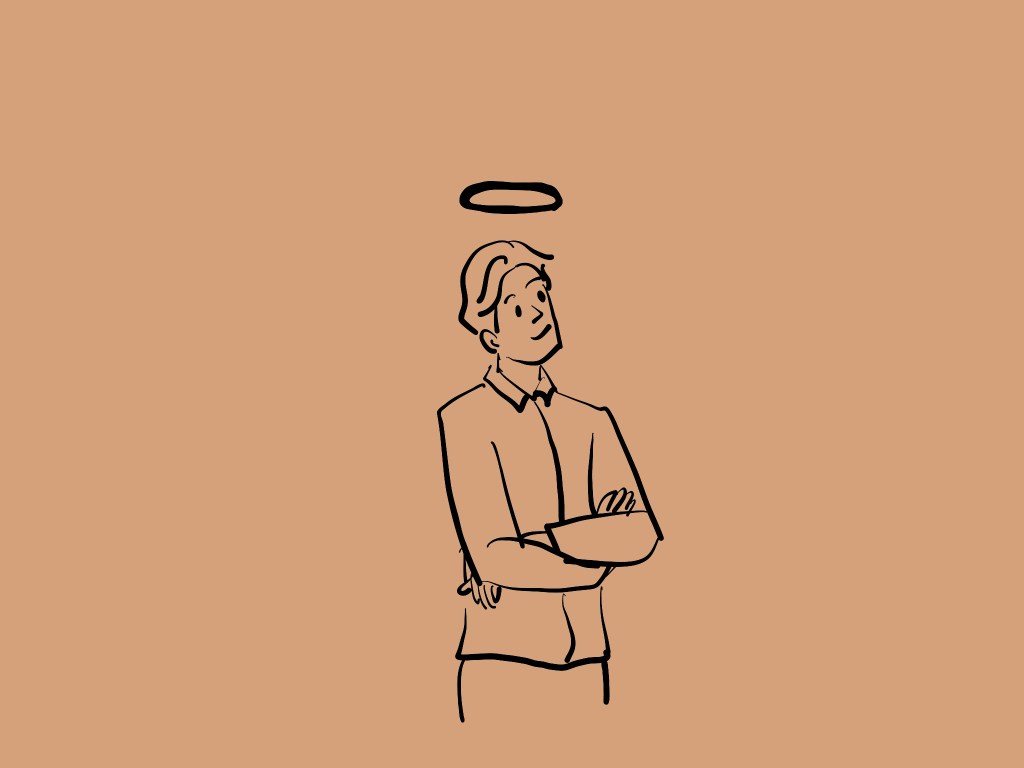
Halo effect is a bias due to which we rate something, or someone positively or negatively entirely based on one incident related to it. For example, we might think that a person wearing glasses has a high IQ.
Edward Thorndike explained the halo effect first in 1920 when he was studying commanding officer’s opinions of their soldiers.
Halo effect is one the various cognitive biases. It involves forming an opinion based on a single attribute. For example, someone might think that an attractive person might also be intelligent or rich.
It can alter our decision-making skills as it provides a mental shortcut and reduces cognitive load.
halo effect is universal and is not affected by cultural backgrounds as proved by Batres & Shiramizu in their study in 2023.
Halo effect also has an impact on tourism. An excellent experience in one aspect of a service might influence the person to overlook the other aspects. Whereas a bad experiment can negatively influence the entire stay. This was given by Nicolau et al. in 2022.
sources: Halo Effect: Why We Judge a Book by Its Cover (positivepsychology.com)
 Paawni Goyal