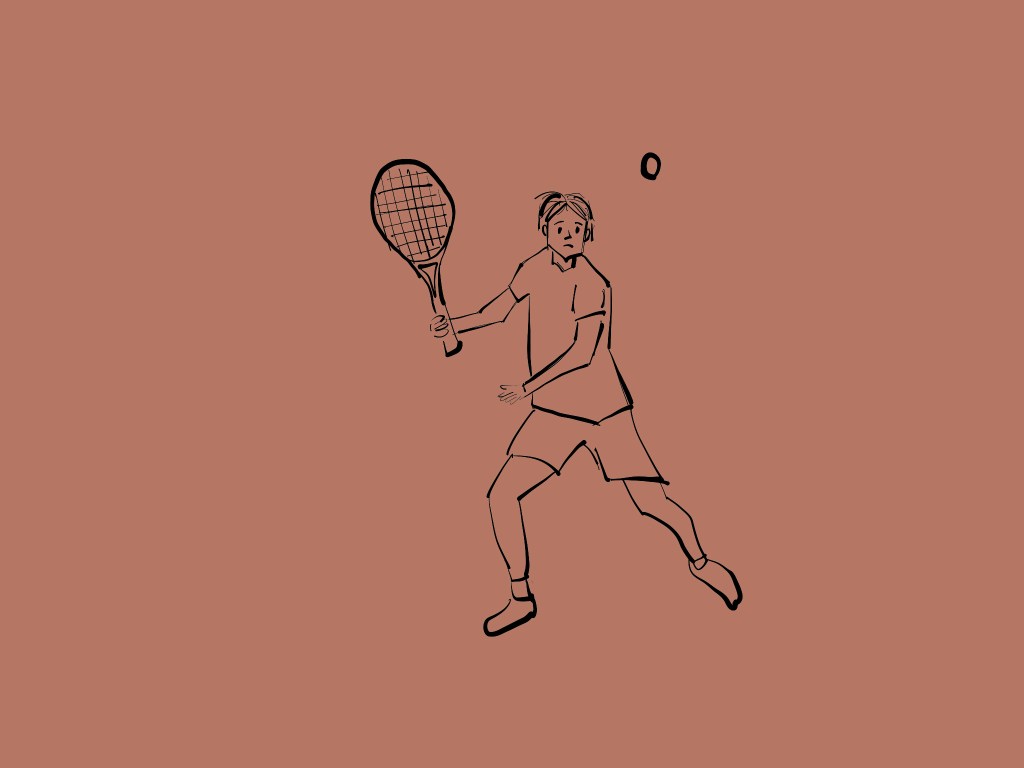
There is a popular phenomenon known as choking. It is a situation in which despite months and years of practice a person fails when a skill or concept is required the most. It is most commonly observed in sports.
When an individual is nervous then his/her performance reduces. Choking under pressure results in loss of focus. This is explained by two theories :
1. The distraction theory:
This states that the performance of an individual suffers when he/she is preoccupied with worries, doubts or fears. It is obvious if you see, a person who is busy thinking about the thoughts that are worrying him/her would be unable to focus on other tasks at hand.
In a 2004 study, a group of students were asked to solve various kinds of math problems. Some that were easy and some that were a bit more complex. There were three groups. The control group that had nothing at stake and just solved the problems. The experimental groups were the calm group and the under pressure group. All the groups were able to solve the easy problems easily. The pressured group performed worse in the complex math problems that were memory intensive whereas the others did fairly well.
2. Explicit monitoring theory:
This states that pressure causes people to over analyse the he task at hand. The persons thinking of how to do a skill integers with actually doing it. The unconscious tasks are the most vulnerable to choking.
A study on competitive golfers compared their performance. In the first situation, the person was just focused on putting. In the second situation, the person was primed to be acutely aware of mechanics of putting score. It was found that the second person became worse at scoring.
Some people are much more susceptible to this than others. Such people are those who are self-conscious, anxious and those who are afraid of being judged by other people.
There are ways to practice staying calm under pressure:
- Practice performing tasks under stressful conditions
- Have a performance routine. For example, taking in a few deep breaths or having a rhythmic movement routine before doing any task.
- External focus on the goal is much better than internal focus on the goal. For example, while shooting a basket in Basketball, don’t focus on your stance and posture instead focus on the direction in which the ball is going to reach the basket.
Source: How to stay calm under pressure – Noa Kageyama and Pen-Pen Chen (youtube.com)
 Paawni Goyal